
Method Writer
A mosaic of warts

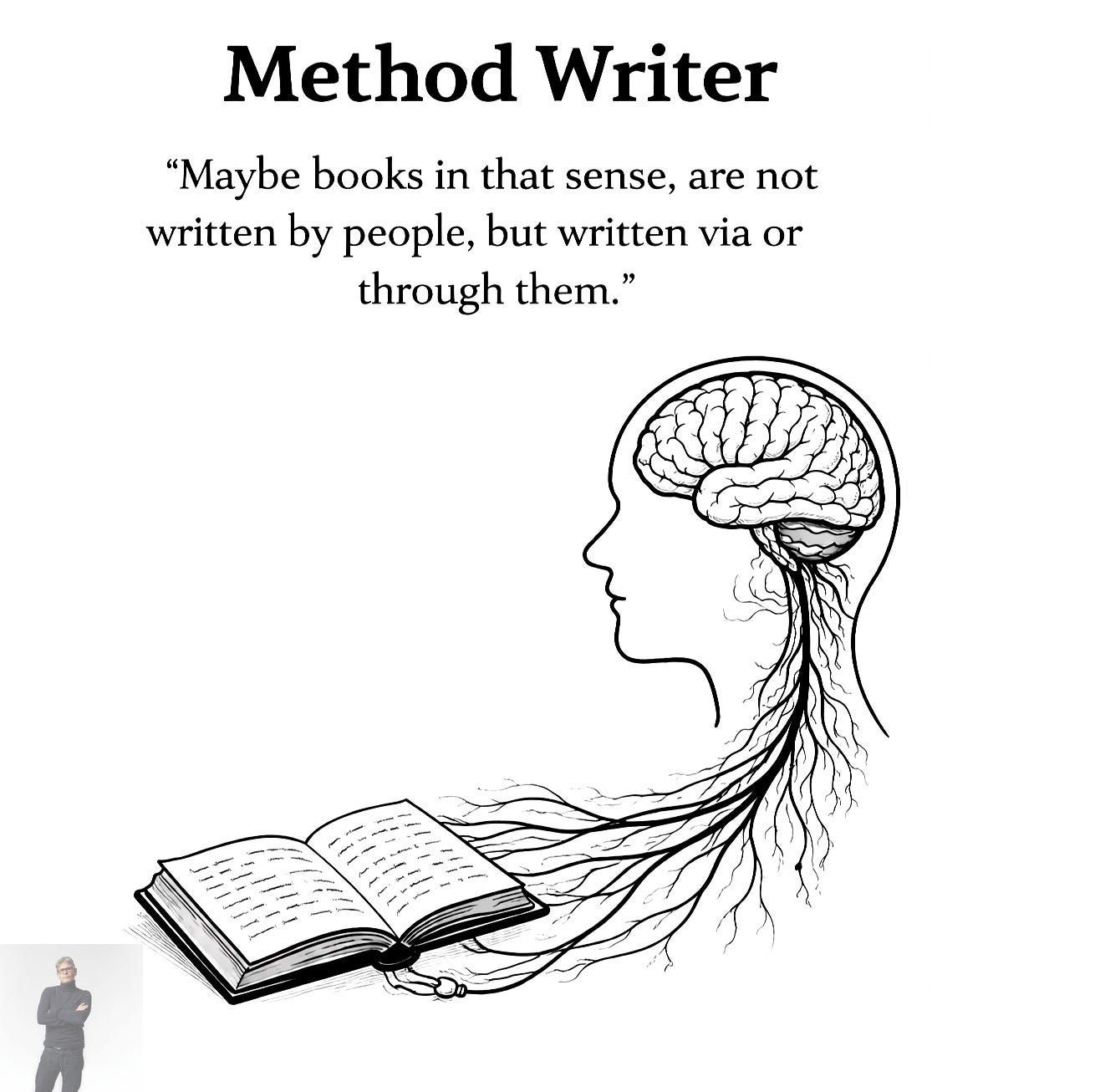
Method Writer
Firstly, I would like to apologise for the tardiness of this post. I do think about what I am going to write upcoming Substacks almost every day. But thinking and writing are not always synonymous.
Sometimes stuff seems to intrude. Good intentions are constantly de-railed by the waft of unplanned commitments and poor planning. Knowing my faults and acting upon them are also not always synonymous.
This Substack is one giant sick-note. Longform excuses. Apple for teacher. Please take it in the spirit in which it was intended.
I promised you in my opening Substack: ‘a glimpse behind the writing and the written’. Well here it is – warts and all. A mosaic of warts.
My publisher, Bloomsbury, are now sending me chapters and revisions for The Cycling Addiction. They all need my urgent and uninterrupted attention. Urgent and uninterrupted.
These are all moments that he forcefully challenges my intentionality on many levels.
My own barrier to expeditious editing is not thematic – i.e. related to content, or even an aversion to criticism. I genuinely relish the feedback from my editor, Nathanial and copy-editor, Christine. This stuff has been in my head - and my head alone - for far too long. A three-year conversation, almost entirely with myself. Nathanial is mission-control – what was the mission of the book? And am I actually delivering upon the clearly stated objective? He is broad-brush – have I deviated from the book’s north-star, under-explained or over-explained? He rarely challenges the words or language that I use, but sometimes challenges my style when it speaks to my confidence. Essentially, Nathanial thinks I over-quote, over-attribute and am prone to over-align myself with the author or interviewee, as a compensation strategy. The word align is of course a euphemism – the actual word I think he has in his head is: ingratiate.
Even though I am old (almost 64), I am youthful in author years. This is only my second book, I am not a trained writer and I therefore unconsciously suffer from imposter syndrome.
He is almost certainly right. Nathanial likes (for the most part) my written voice, but he also wants me to use it to proclaim the most difficult topics in the book, more of the time. Rather than absent myself out of an abundance of caution and simply quote what Professor So-And-So has previously stated or written. Nathanial, in addition, has a long stated aversion to my habit of referring how close I may be to an interviewee or author. Introducing them as ‘my good friend’ or ex-team-mate’ or ‘long-time colleague’ – these are his pet peeves. These are all moments that he forcefully challenges my intentionality on many levels.
“At this point Phil, is it not enough that you say it and you think it?”
“Nobody cares how well you know someone or how much you like them, Phil.”
“It severely breaks up the narrative flow of the point or issue, Phil. An unnecessary and highly questionable look behind a curtain, that nobody is remotely interested peering behind.”
Just to be clear – unnecessary is code for ingratiating. I seek to hide behind their credentials because I don’t have enough of my own.
